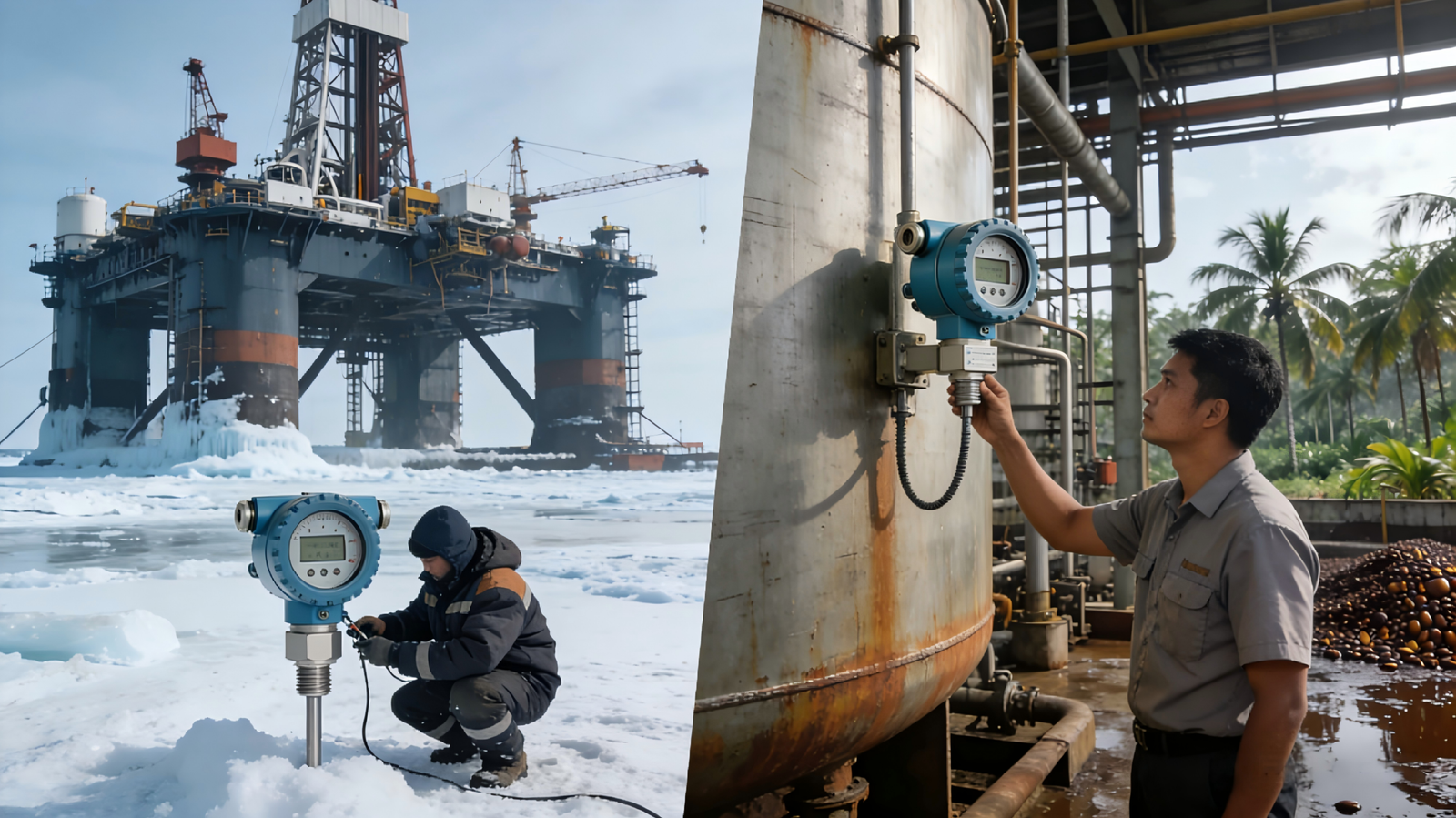
In the world of industrial automation, accuracy is everything. Whether you are managing an oil refinery in Siberia, a palm oil processing plant in Indonesia, or a water treatment facility in Vietnam, the reliability of your operations hinges on one critical component: sensors.
At [Your Company Name], we specialize in high-performance pressure sensors, temperature sensors, and level sensors designed to withstand the toughest conditions. With the rapid industrial growth in Southeast Asia and the demanding infrastructure projects across Russia and the CIS regions, selecting the right sensing technology is more crucial than ever.
Here are the key factors to consider when sourcing industrial sensors for your next project.
- Understanding Your Environment: Southeast Asia vs. Russia
One of the biggest mistakes buyers make is using a one-size-fits-all approach to sensor selection. The operating environment dictates the hardware.
- For the Southeast Asian Market (Indonesia, Vietnam, Thailand):
The primary challenges here are high humidity, tropical heat, and corrosive agents often found in food processing or chemical industries. For customers in this region, we recommend sensors with a high Ingress Protection (IP) rating—specifically IP67 or IP68—to protect against heavy rainfall and washdowns. Additionally, for outdoor installations, look for sensors with UV-resistant cablesand coatings to prevent degradation from intense sun exposure.
- For the Russian Market & CIS:
Russia’s industrial sectors (oil & gas, mining, metallurgy) demand extreme resilience against low temperatures. Standard electronics often fail when the mercury drops below -20°C. Our pressure and level transmitters are engineered to operate reliably in -40°C to +85°C ranges without condensation buildup inside the housing. For Russian clients, Explosion-proof (Ex-proof) certifications (such as ATEX or EAC Ex) are non-negotiable, especially in the petrochemical sector.
- Material Compatibility and Durability
When measuring aggressive media like crude oil, acidic chemicals, or slurry in mining operations, the wetted parts of your sensor must resist corrosion.
- Pressure Sensors: For high-viscosity media common in Russian oil fields, consider flush diaphragm pressure sensors. They prevent clogging and ensure accurate readings.
- Level Sensors: For water and wastewater management in Southeast Asian urban development projects, submersible level sensors with stainless steel 316L bodies offer the best longevity against rust and corrosion.
- Temperature Sensors: Rapid temperature fluctuations can cause mechanical stress. Investing in sensors with fast response times and robust thermowell assemblies ensures that your temperature readings remain stable, even during CIP (Clean-in-Place) cycles in food and beverage plants.
- Output Signals and Compatibility with PLCs
Your sensors are only as good as their integration capabilities. In both the Russian and Southeast Asian markets, factories are modernizing their SCADA systems.
- 4-20mA Analog: Still the industry standard for long-distance transmission, especially in large-scale Russian mining sites where signal integrity over kilometers is essential.
- RS485 / Modbus: Highly popular in Southeast Asian manufacturing hubs for smart factories. Digital outputs allow for daisy-chaining multiple sensors, reducing wiring costs.
- IO-Link: As Industry 4.0 gains traction in markets like Thailand and Malaysia, having smart sensors with IO-Link communication allows for predictive maintenance—alerting your team before a failure occurs.
- Certification and Compliance
If you are importing sensors into Russia or exporting finished machinery to Southeast Asia, certifications matter.
Customization: We offer OEM services. If your application requires specific threads, diaphragms, or cable lengths, we can customize the sensor to your exact specifications.
Conclusion
Selecting the right pressure, temperature, and level sensors requires a balance of technical specifications and environmental awareness. By matching the sensor’s material, output, and certification to the specific demands of your region—be it the humidity of Southeast Asia or the freezing conditions of Russia—you ensure safety, efficiency, and long-term ROI.
Ready to upgrade your industrial monitoring?
[Contact us today] for a consultation, or browse our catalog to find the perfect sensor for your application.
For Russia: Ensure your suppliers provide EAC (Eurasian Conformity)certification. Without EAC, your equipment cannot legally operate in the Russian Customs Union.
For Southeast Asia: While regulations vary, having CE, ISO 9001, and in some cases IECEx (for hazardous areas) significantly speeds up customs clearance and builds trust with local distributors.
Why Choose [Your Company Name]?
We understand that downtime is expensive. Whether you need a ruggedized pressure sensor for a Siberian pipeline or a high-accuracy level sensor for a Thai smart farm, we provide tailored solutions.
Global Standards: Our products meet ISO, CE, and EAC standards.
Wide Range: We offer everything from standard industrial transmitters to high-temperature melt pressure sensors.