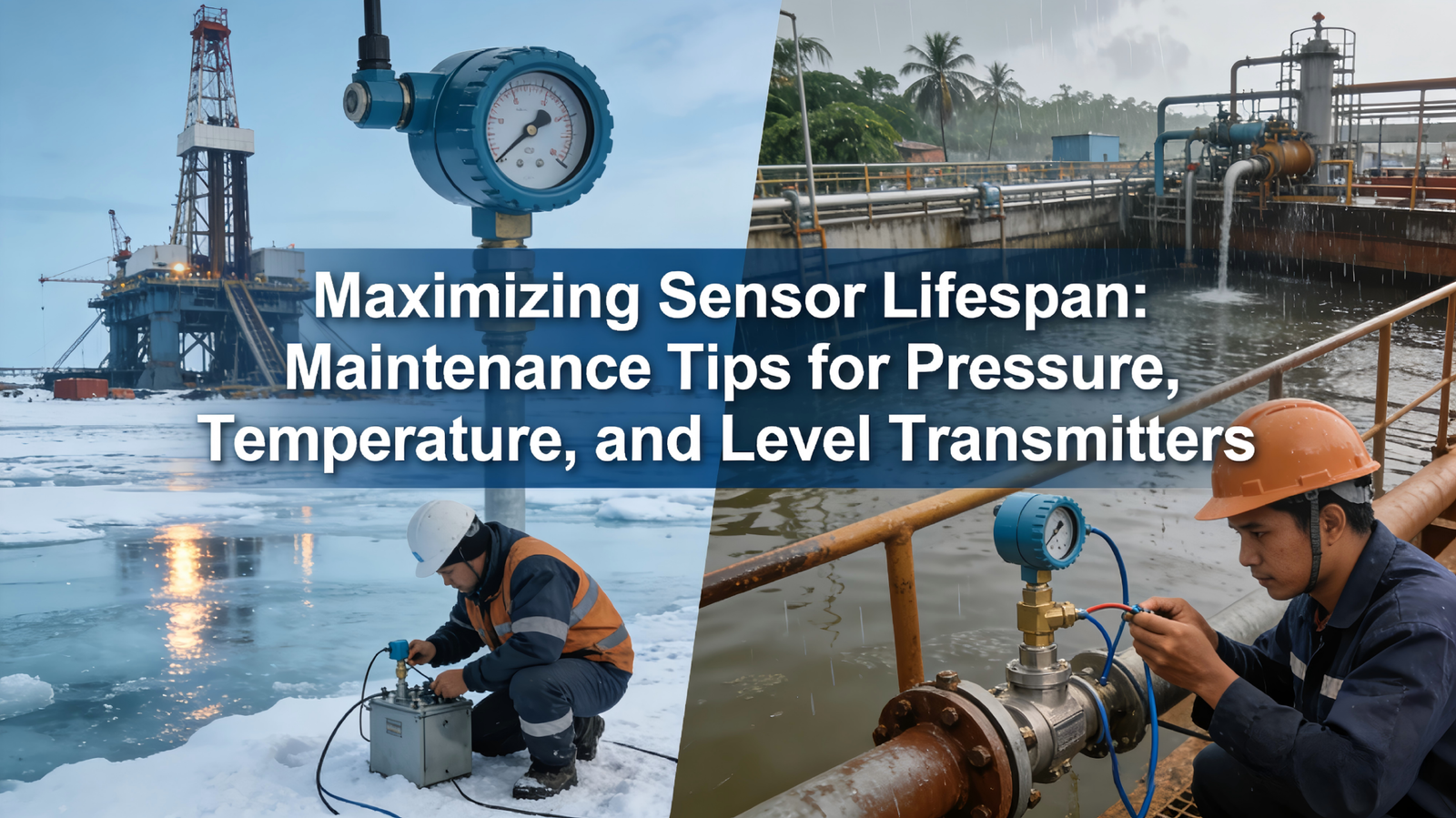
Industrial sensors are the silent workhorses of modern automation. A single faulty pressure transmitter or a drifting temperature sensor can lead to production downtime, safety hazards, and costly re-calibration. In markets like Russia and Southeast Asia, where environmental conditions push equipment to its limits, proactive maintenance is not just good practice—it is essential.
At [Your Company Name], we engineer pressure sensors, temperature sensors, and level sensors for durability. However, even the most robust equipment performs best with proper care. Here are five practical tips to extend the service life of your industrial transmitters and ensure consistent accuracy.
1. Master the Art of Proper Installation
Many sensor failures trace back to installation errors. In Russia’s oil and gas sector, incorrectly mounted pressure sensors can suffer from freezing in winter. In Southeast Asia’s water treatment plants, poor sealing can invite moisture ingress.
- For Pressure Sensors: Always verify that the process connection (thread size, seal type) matches your piping. Use appropriate torque—over-tightening can damage the diaphragm, while under-tightening causes leaks. For cold climates, consider heated enclosures or remote mounting to prevent process media from freezing inside the sensor cavity.
- For Level Sensors: Submersible level transmitters must be installed with strain relief. Never hang them by the cable alone. Use a suspension clamp to support the weight, preventing cable jacket damage over time.
- For Temperature Sensors: Ensure the insertion depth is sufficient to reach the true process temperature. Shallow insertion leads to measurement errors and may expose the sensor tip to external ambient temperatures, causing premature thermal stress.
2. Protect Against Environmental Hazards
The environments across Southeast Asia and Russia present opposite but equally damaging challenges.
- In Southeast Asia (high humidity, heavy rainfall, coastal areas): Corrosion is the enemy. Use sensors with IP67 or IP68 enclosures and 316L stainless steel wetted parts for resistance against salt air and humidity. For outdoor installations, apply dielectric grease to electrical connectors to prevent moisture-induced signal drift.
- In Russia & Northern Regions (extreme cold, ice formation): Low temperatures can cause LCD displays to freeze and O-rings to become brittle. Select sensors rated for -40°C operation and use armored cables that remain flexible in sub-zero conditions. Regularly inspect cable glands for cracks caused by thermal cycling.
3. Implement a Regular Calibration Schedule
Accuracy degrades over time. For industries like petrochemicals (common in Russia) and food & beverage (growing rapidly in Southeast Asia), regulatory audits demand traceable calibration records.
- Frequency: We recommend calibrating critical process sensors every 6 to 12 months, depending on the application severity. High-vibration environments (e.g., mining in Siberia or heavy machinery in Thailand) may require more frequent checks.
- Method: Use a handheld calibrator or compare the sensor output against a known reference standard. Keep a log of zero and span drift to identify sensors that are degrading before they fail completely.
- Tip: Choose sensors with analog output (4-20mA) for easier field calibration, or invest in smart sensors with digital communication (HART, Modbus) that allow remote diagnostics without breaking the process seal.
4. Safeguard Against Electrical Damage
Electrical surges and electromagnetic interference (EMI) are common culprits of sudden sensor death. In industrial zones across Vietnam, Malaysia, and Russian manufacturing hubs, nearby motors, VFDs, and welding equipment can introduce noise.
- Cable Shielding: Always use shielded cables and ensure the shield is properly grounded at one end to drain interference.
- Surge Protection: For outdoor sensors exposed to lightning-prone regions (common in tropical Southeast Asia), install surge protectors on the signal loop.
- Power Supply Stability: Ensure the DC power supply is stable and within the sensor’s rated range. Over-voltage is a quick way to fry a transmitter.
5. Choose the Right Sensor for the Application—From the Start
Maintenance cannot compensate for a fundamentally mismatched sensor. When sourcing for projects in Russia or Southeast Asia, consider these regional specifics:
- Certifications: For hazardous areas (gas stations, refineries), ensure the sensor carries EAC Ex certification if destined for Russia, or IECEx/ATEX for international compliance.
- Material Compatibility: In Southeast Asia’s chemical processing, a standard aluminum housing may corrode within months. Opt for stainless steel housings and ceramic or titanium diaphragms for aggressive media.
- Custom Options: Many of our clients in both regions benefit from custom cable lengths, different process connections (NPT, BSP, flange), and extended warranty programs tailored to harsh environments.
Conclusion
Your investment in pressure, temperature, and level sensors pays dividends in reliability and safety—but only if those sensors are properly maintained. By following these installation, protection, calibration, and electrical safety practices, you can significantly extend the operational life of your measurement equipment.
At [Your Company Name], we don’t just sell sensors; we provide long-term partnership. Whether you operate in the humid tropics of Southeast Asia or the freezing landscapes of Russia, we offer rugged, certified, and customizable solutions backed by expert support.
Need help selecting the right sensor for your environment? [Contact our team] for a personalized recommendation.