Beautiful Plants For Your Interior
Beautiful Plants For Your Interior
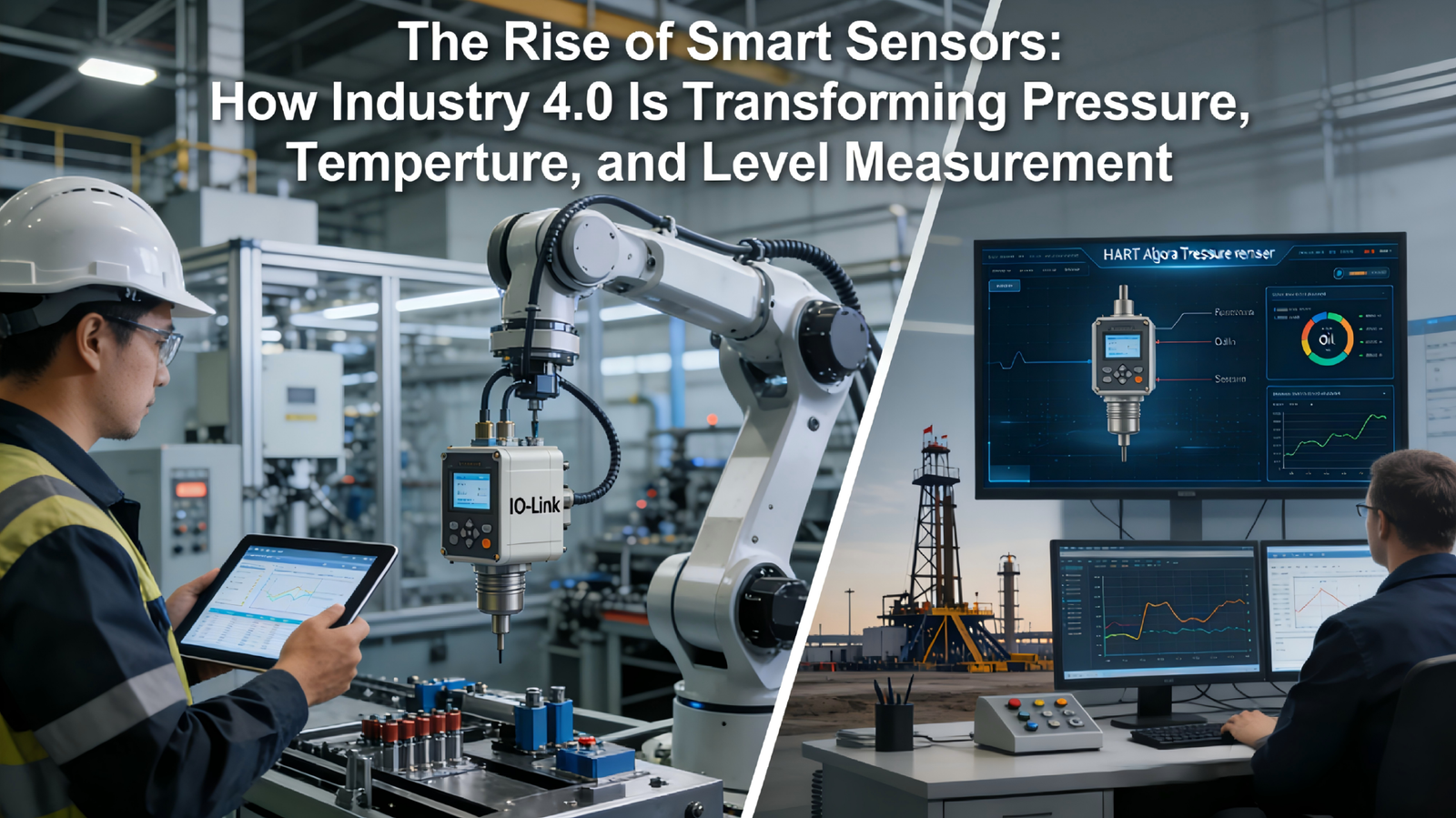
The fourth industrial revolution—Industry 4.0—is reshaping manufacturing and industrial automation across the globe. From smart factories in Thailand and Vietnam to digitalized oil fields in Russia, the demand for intelligent, connected sensing solutions is growing rapidly.
At [Your Company Name], we are at the forefront of this transformation, offering smart pressure sensors, temperature sensors, and level sensors that do more than just measure—they communicate, diagnose, and optimize. In this post, we explore how smart sensor technology is changing industrial operations and what it means for businesses in Southeast Asia and Russia.
Traditional sensors simply convert a physical measurement (pressure, temperature, or level) into a standard analog signal—typically 4-20mA. While reliable, these sensors offer limited visibility into their own health or the process conditions.
Smart sensors, by contrast, integrate digital communication capabilities, onboard processing, and diagnostic features. They provide:
In industries like automotive manufacturing in Thailand or petrochemical processing in Russia, unplanned downtime can cost tens of thousands of dollars per hour. Smart sensors with diagnostic capabilities alert maintenance teams to developing issues—such as a pressure transmitter experiencing excessive vibration or a temperature sensor showing drift—allowing for scheduled intervention rather than emergency shutdowns.
Traditional sensor setup often requires manual calibration and configuration. With smart sensors featuring IO-Link, parameters such as measurement range, switching points, and output logic can be configured remotely via a controller or software. This is particularly valuable for large-scale projects—like water treatment plants in Vietnam or mining operations in Siberia—where hundreds of sensors need to be commissioned quickly and consistently.
Smart sensors provide continuous access to process data, not just the current measured value. For example, a smart level sensor can report actual fill level, temperature, and device status simultaneously. This data can be fed into SCADA systems, cloud platforms, or local HMIs, enabling operators to make more informed decisions.
For manufacturers in Southeast Asia’s fast-moving consumer goods sector, production lines often change over to different products. Smart sensors with programmable parameters can adapt to new requirements without physical reconfiguration—reducing changeover time from hours to minutes.
Southeast Asia: The Smart Factory Hub
Countries like Thailand, Malaysia, and Vietnam are aggressively pursuing smart manufacturing initiatives under programs like Thailand 4.0 and Malaysia’s Industry4WRD. Manufacturers in electronics, automotive, and food processing are increasingly specifying IO-Link-enabled sensors for new lines. For suppliers, offering smart sensors with digital communication is no longer a differentiator—it is becoming a baseline requirement.
Russia: Digitalization of Heavy Industry
While Industry 4.0 adoption in Russia has historically focused on heavy industries like oil, gas, and mining, digital transformation is accelerating. Russian operators are investing in remote monitoring solutions for pipelines, tank farms, and drilling platforms—applications where sending a technician to a remote Siberian site is both costly and time-consuming. Smart sensors with HART communication allow operators to monitor process variables and device health from centralized control rooms, significantly reducing field visits.
When upgrading to smart sensing technology, consider the following factors:
The next frontier for smart sensors is direct integration with the Industrial Internet of Things (IIoT). Wireless smart sensors—using protocols like LoRaWAN, NB-IoT, or 4G—are gaining traction for remote monitoring applications. Imagine a level sensor on a water tank in a remote Indonesian village transmitting data directly to a cloud dashboard, or a pressure sensor on a Russian pipeline sending real-time alerts to a mobile device.
At [Your Company Name], we are actively developing wireless and cloud-connected solutions to meet these emerging needs, ensuring our customers stay ahead of the technology curve.
We combine decades of sensing expertise with a forward-looking approach to Industry 4.0. Our smart sensor portfolio includes:
Whether you are building a new smart factory in Southeast Asia or modernizing an existing facility in Russia, we have the products and technical support to help you succeed.
Contact our team today to learn how our smart pressure, temperature, and level sensors can improve your operational efficiency, reduce downtime, and prepare your business for the future of industrial automation.